Cars: Merge and Defend
- 4.3
- Rating
- 1.00M
- Installs
- Free
- Price

 Analysis by App-foxy
I found Cars: Merge and Defend most interesting as a short-session arcade game rather than a deep driving simulator. Its central appeal is easy to understand: combine cars, prepare for battle, and keep making quick decisions while the action develops. I played it with that expectation, and it works best when I want something light that can fill a few spare minutes without demanding a long tutorial or a large time commitment.
The game comes from Gimica GmbH and is free to download, with optional purchases ranging from $0.99 to $9.99 per item. It is listed for Everyone 10+, runs on Android 7.0 or later, and its current version is 1.3.0. Those details make it a fairly approachable choice for many Android users, although the purchase options are worth remembering if a child will be playing on the device.
How clearly the game communicates what to do
The strongest part of the experience is the basic idea. Cars: Merge and Defend does not ask me to learn a complicated control scheme before I can understand its purpose. The merge concept gives the game a visible sense of progress: I can look at the available cars, identify possible combinations, and decide what deserves attention first. That makes the opening feel more inviting than an arcade game that throws several unrelated systems at me at once.
You May Also Like

 Blood Strike: 2.5 Anniversary
Blood Strike’s Loadouts Turn Every Drop Into a Tactical Gamble
A close look at Blood Strike’s custom loadouts: how fast access to signature weapons reshapes its battle royale rhythm, rewards preparation, and narrows the gap between fights.

 Pandora - Music & Podcasts
Pandora’s Music Is Easy to Start, but Harder to Recover
Pandora’s strength is its low-effort path from a seed to a station. Its weak spot is how much confidence it asks you to place in connection, setup, and quiet recovery.

 8 Ball Pool
 Is Built on Rivalries, Rematches, and Routine
A close look at the rivalries, rematches, shared routines, and unanswered safety questions that turn a quick pool match into a persistent mobile community.

 Samsung Music
’s Quiet Strength Is Playing What You Already Own
Its reach comes less from spectacle than from dependable access to a personal library. That simplicity is both the app’s strongest retention engine and its ceiling.

 AccuWeather: Weather Radar
AccuWeather Review: A Quick, Clear Forecast for Everyday Decisions
For everyday plans, the best forecast is the one you can understand quickly. AccuWeather makes rain timing, radar, and local conditions easy to act on, with a few trade-offs.

 Hill Climb Racing
Why Hill Climb Racing Still Turns Crashes Into One More Run
A tiny car, a bumpy hill and one more upgrade: Hill Climb Racing keeps resurfacing because its simple chaos makes every near-miss feel personal.
More From Our News Desk



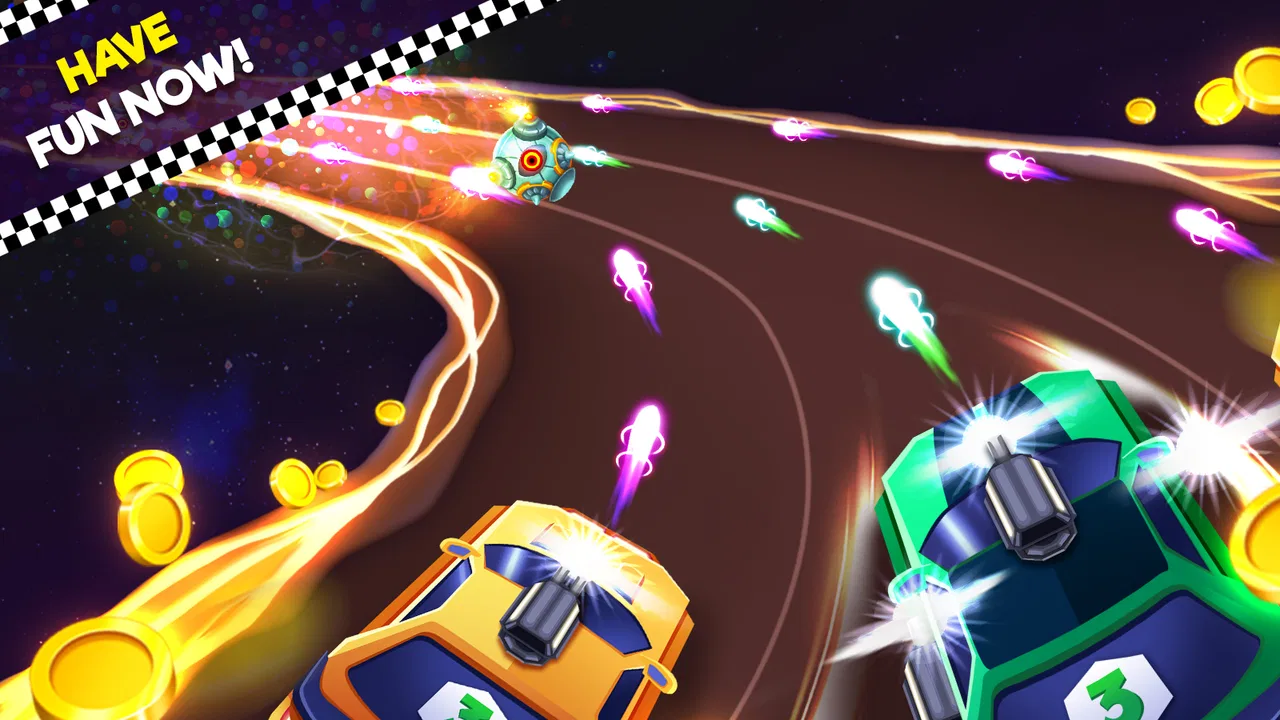
For players who prefer visual information, the car-focused presentation is useful. The objects on screen are easier to recognize than a menu full of abstract symbols, and the battle theme gives each action an immediate context. I do not need to remember a long list of commands to make a decision. The main challenge is usually noticing what can be combined and judging when preparation matters more than acting quickly.
That clarity also helps people who are new to merge games. Someone who has never played this particular style can understand the broad rhythm after a short session: inspect the board, improve the available cars, and respond to the threat. I would still recommend playing the first rounds without rushing. The game becomes easier to read once I stop treating every move as an emergency and start looking for the best available combination.
Navigation is most comfortable when I use the game in a quiet setting and keep the screen at a practical distance. Like many compact arcade experiences, it benefits from attention. If I am switching between the game and messages, I can lose track of what I was planning to merge. This is not a serious flaw, but it means the game feels clearer in focused bursts than during constant interruptions.
The rating of 4.4 from around 21 thousand ratings suggests that the straightforward formula has found a sizeable audience. More than a million installs also indicate that it is not an obscure experiment with a tiny player base. I would not treat those figures as proof that every player will enjoy it, but they do make the game easier to consider as a familiar, low-commitment arcade option.
Readability matters more than speed
My practical advice is to avoid playing for the first time while walking, commuting through a crowded place, or doing another task that needs visual attention. The game may be simple to understand, but simple does not mean effortless. A player still has to distinguish the available cars, notice changes in the play area, and choose whether to merge immediately or wait.
This creates an interesting accessibility trade-off. The rules are easier to grasp than those of a strategy game with many menus, yet the visual focus can become demanding when the screen is busy or the player is tired. People with reduced visual attention may prefer shorter sessions, larger device displays, or a calmer environment. I would also avoid assuming that a player who understands the rules will automatically find every moment easy to follow.
There is value in that compact design for players with limited gaming experience. A friend who normally avoids complex mobile games could pick this up and understand the objective without studying a manual. On the other hand, someone who needs strong text customization, spoken guidance, or highly adjustable visual presentation should check the game personally before relying on it. I would not promise those options without seeing them clearly in the installed version.
Motor demands, sensory comfort, and everyday play
From a motor perspective, the game is more approachable than an arcade title built around constant steering, rapid aiming, or repeated button combinations. The merge action gives the player a moment to think, which can be helpful for anyone who finds fast reflex games tiring. I can play in brief attempts and put the phone down without feeling that I have committed to a long competitive session.
That does not make it completely free of motor demands. Combining cars still requires accurate touch interaction, and the timing of a decision can matter. Players who have difficulty with small touch targets, quick taps, or repeated gestures may find some situations less comfortable than the basic rules suggest. I would use a stable grip and play with one hand only if the controls feel easy to reach; otherwise, holding the phone with both hands gives better control and reduces accidental touches.
The game also suits players who want a break from virtual driving controls. Although cars are the theme, this is not the same experience as a racing game that asks me to steer through a track. That distinction is important. If I want the physical feeling of driving, a conventional racer is likely to be more satisfying. If I want to think about car combinations and defense without managing a vehicle around corners, this game is the better fit.
Sensory comfort depends on the individual. Arcade presentation can be engaging, but moving objects, visual changes, and battle pressure may become tiring for players sensitive to busy screens. I found it easier to concentrate when I lowered distractions around me rather than trying to play while watching television or talking with someone. A short session is also a sensible approach for younger players who enjoy the theme but lose focus when the action becomes visually dense.
The Everyone 10+ classification gives families a useful starting point, but it should not replace personal judgment. Age labels do not tell me whether a particular child will find the pace comfortable, understand the purchase prompts, or become frustrated by repeated attempts. I would let a child try it with supervision first, especially because the game is free to start but includes optional in-app purchases.
A realistic use case: the five-minute reset
My favorite way to use Cars: Merge and Defend is during a short wait: before an appointment, while food is cooking, or after finishing a small task. I can open it, make a few decisions, and stop before it takes over the evening. The merge structure gives those minutes a purpose, while the arcade format keeps the commitment lower than a long-form strategy game.
For a player with limited energy, this short-session approach is more practical than trying to complete a large campaign. I would play while seated, keep the phone at a comfortable distance, and stop as soon as concentration starts to drop. That is not merely a comfort tip; it also improves decision-making. When I am tired, I am more likely to merge without considering what I may need next.
A useful habit is to pause mentally before every obvious combination. The most visible merge is not always the most useful one. I try to scan the whole available area first, identify whether a stronger arrangement is possible, and only then commit. This small delay makes the game feel less like random tapping and more like a compact planning exercise. It is one of the more rewarding ways to get depth from a simple premise.
Where it differs from familiar arcade alternatives
Compared with a traditional racing game, Cars: Merge and Defend is less demanding in terms of steering and reaction control. That makes it a better option for someone who likes car themes but does not want a driving challenge. A racing game is preferable when speed, tracks, and direct vehicle control are the main attraction.
Compared with a pure merge puzzle, this game adds a defensive battle purpose to the combinations. That gives each improvement more urgency than simply arranging objects for points. The trade-off is that players who want a slow, peaceful puzzle may find the battle framing less relaxing. A conventional merge puzzle would be a better choice for someone who dislikes pressure or wants to plan without an active threat.
It also sits between casual and strategic play. It is easier to enter than a large strategy title, but it is not completely mindless. I still need to decide when to combine, what to preserve, and how much attention to give the developing situation. Players seeking a long campaign, extensive character development, or a highly competitive multiplayer environment should look elsewhere. This is a focused arcade loop, not a replacement for a full strategy game.
Situational access and the barriers that remain
The game is most accessible when the player can see the screen clearly, touch it accurately, and give the session undivided attention. That makes a tablet or a larger phone potentially more comfortable than a very small handset, especially for anyone who struggles to distinguish nearby objects. I would also avoid playing in strong glare, since reflections can make visual sorting harder and encourage mistakes.
One practical limitation is the dependence on the touchscreen. A player who prefers physical buttons, keyboard controls, or a controller may not feel at home here. Even if the game’s rules are approachable, the interaction still assumes that tapping and moving items on a phone feels natural. This is an important reason to skip it if touch input is uncomfortable or unreliable.
Another consideration is attention switching. I would not choose it for a situation where I need to monitor traffic, supervise a child closely, or respond immediately to other people. The sessions may be short, but the game still asks me to look at the screen and make timely choices. It is suitable for a private pause, not for divided attention in a demanding environment.
The free entry point lowers the financial barrier, but the optional purchases change the decision for families. I would review the device’s purchase controls before handing the game to a child and explain that free installation does not mean every item inside the game is free. For adults, the purchase range may be manageable, but I would still avoid buying impulsively just to solve a difficult moment. The game is more enjoyable when improvement comes from observing the board rather than treating every obstacle as a reason to spend.
The developer is Gimica GmbH, and the game was released on Jul 21, 2022. Its current version is 1.3.0, which is useful context when deciding whether it fits a device or whether an update may be needed. I would keep enough free space for normal app operation and install it only on a device that meets the Android 7.0 minimum requirement.
There are also social and emotional barriers to consider. Players who dislike repeated failure may become frustrated if a promising arrangement does not produce the result they expected. I found that the best response is to treat each attempt as information rather than as a test of reflexes. If that loop feels motivating, the game can be satisfying. If it feels repetitive, no amount of car-themed presentation will make it the right choice.
Who should try it, and who should skip it?
I would recommend it to casual players who enjoy merge mechanics, want car imagery without a racing control scheme, and prefer games that can fit into short breaks. It is also worth trying for someone who wants a gentle introduction to arcade strategy. The combination of visible objects and immediate goals makes the first step less intimidating than a game that begins with a large skill tree or a complicated map.
I would be more cautious about recommending it to players who need extensive accessibility settings, dislike visual pressure, or have difficulty with touch accuracy. I would also skip it if my main goal were realistic driving, a story-heavy adventure, or a deep long-term strategy system. Those needs point toward different categories, and this game should not be judged as though it promises them.
For families, I see it as a supervised casual option rather than an automatic child-friendly choice. The age rating is Everyone 10+, and the purchase range means adults should set expectations before play begins. A parent can also use the short-session structure positively by agreeing on when the game starts and ends, instead of allowing a free game to become an unplanned source of extended screen time.
My inclusive verdict
Cars: Merge and Defend succeeds because it makes a car-themed arcade idea easy to approach without turning it into a full racing simulator. I like that it gives me something to think about while keeping the basic objective visible. The merge decisions offer more involvement than a purely passive time-killer, and the defensive framing gives each upgrade a reason to matter.
Its accessibility is strongest at the level of entry: the concept is understandable, sessions can be brief, and the motor demands are generally lighter than those of steering-heavy arcade games. Its weaker side is situational. Visual attention, touchscreen accuracy, and comfort with battle pressure still matter, and players who need specific accessibility tools should test the experience rather than assume it will meet every need.
The average rating of 4.4 and its audience of over a million installs show that the format has broad appeal, but my recommendation is more specific. I would choose it for a quiet five-minute break, a casual car-themed challenge, or a simple introduction to merge-based arcade play. I would choose another game for realistic driving, deep strategy, or a deliberately calm puzzle experience.
In the end, the best reason to download it is not the promise of endless complexity. It is the tidy loop of looking, combining, defending, and trying again. For players who value clear goals and manageable sessions, that focused loop is the game’s real strength. Just keep the screen comfortable to read, play when you can concentrate, and remember that the free download includes optional purchases. With those expectations, Cars: Merge and Defend is an easygoing arcade choice that earns a place on my casual-games list.
FAQs for Cars: Merge and Defend
01What is the main objective of Cars: Merge and Defend?
In Cars: Merge and Defend, the main objective is to strategically merge cars to create stronger vehicles that can defend against waves of enemy attacks. Players must use their resources wisely to upgrade and enhance their fleet, ensuring they can withstand increasingly challenging levels and protect their territory.
02How does the merging mechanic work in the game?
The merging mechanic in Cars: Merge and Defend involves combining two identical cars to form a more powerful vehicle. This process not only increases the car's strength but also its defensive capabilities. Players must carefully plan their merges for maximum efficiency and effectiveness against incoming threats.
03Are there in-app purchases in Cars: Merge and Defend?
Yes, Cars: Merge and Defend offers in-app purchases. Players can buy various items, such as additional resources, special cars, or boosts, to enhance their gameplay experience. While the game is free to download, these optional purchases can help accelerate progress and provide advantages in tougher levels.
04What are the system requirements for Cars: Merge and Defend?
To play Cars: Merge and Defend, users need a device running Android version 5.0 or iOS version 10.0 or later. The game requires a moderate amount of storage space and a stable internet connection for optimal performance, especially for features that involve online leaderboards or multiplayer options.
05Can I play Cars: Merge and Defend offline?
Cars: Merge and Defend offers limited offline functionality. While some basic features may be accessible without an internet connection, players will need to be online to access certain game modes, updates, and multiplayer interactions. Online play ensures access to the full range of features and content.
Pros
- Engaging merge mechanics keep gameplay fresh.
- Multiple car upgrades for strategic depth.
- Vibrant graphics enhance visual appeal.
- Offline mode available for uninterrupted play.
- Frequent updates with new content.
Cons
- In-app purchases can be pricey.
- Some ads disrupt the gaming flow.
- Gameplay may become repetitive.
- Limited social interaction features.
- Battery drain on older devices.

Cars: Merge and Defend
Gallery